Reframing Disability Beyond the Language Debate
Reframing Disability Beyond the Language Debate
Reframing Disability Beyond the Language Debate
Emily Ladau challenges linguistic norms, advocating for individual choice and respect in disability identification and narratives
Emily Ladau challenges linguistic norms, advocating for individual choice and respect in disability identification and narratives
Emily Ladau challenges linguistic norms, advocating for individual choice and respect in disability identification and narratives
In her quest to define herself, Emily Ladau takes a candid journey into the world of disability language, sharing her personal confrontations and revelations about Person-First Language (PFL) and Identity-First Language (IFL). With a vivid recollection of being singled out by a professor about the “correct” way to address her own disability, Ladau delves into the complexities and nuances of how society and the disability community perceive and use these terminologies.
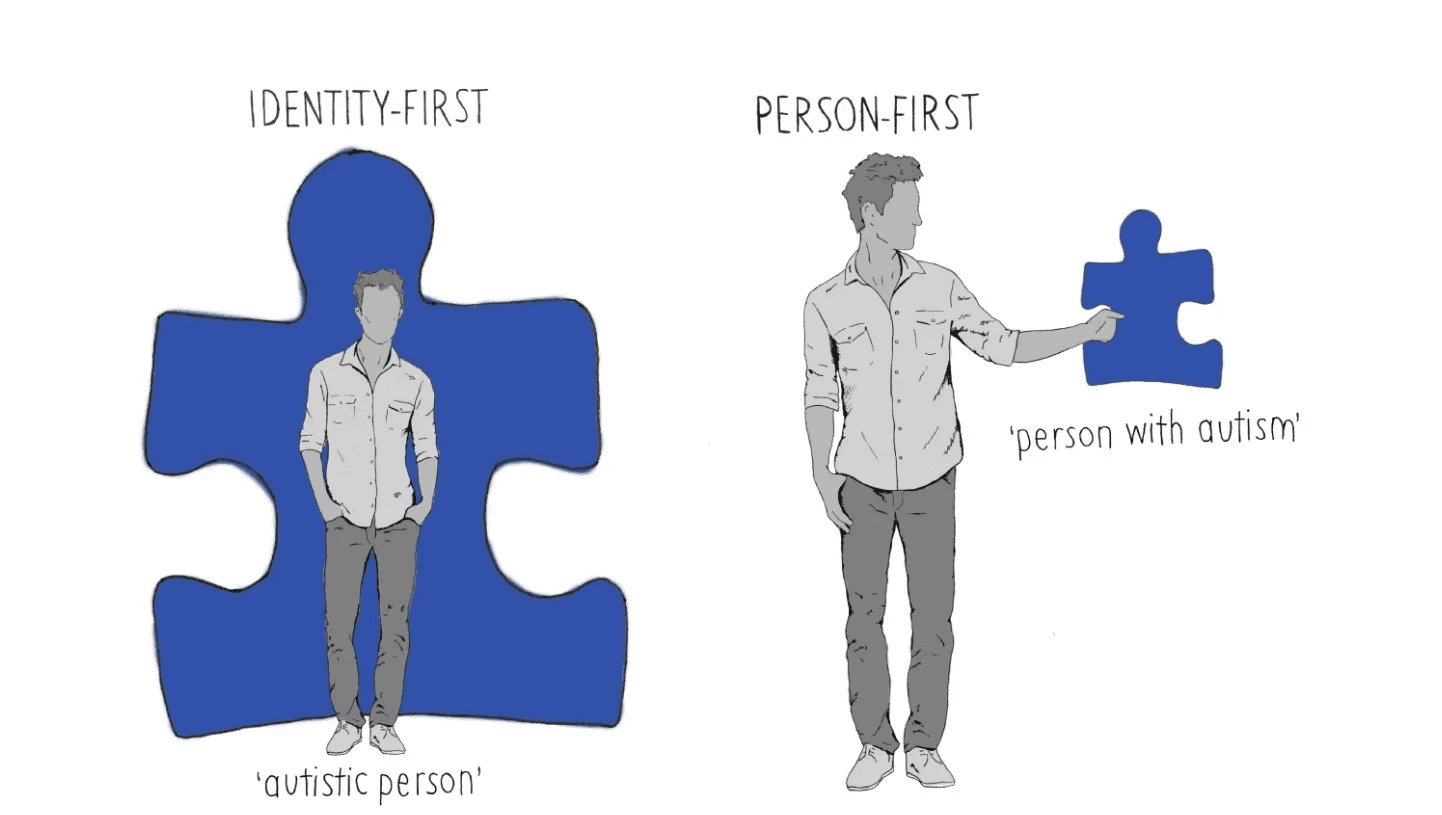
Person-First Language, rooted in the intention to combat societal stigmas, places the individual before their disability, emphasizing terms such as "person with disability" or "girl with autism." Yet, it inadvertently perpetuates the very stigma it seeks to eliminate by distancing a person from their disability, implying it's something negative. On the other hand, Identity-First Language champions the integration of disability into personal identity. Here, phrases like “disabled person” or “Autistic person” are not only accepted but celebrated. Such terms underscore disability as an inherent part of one's identity, similar to being Asian or Jewish. It paints disability not as something negative but as an intrinsic and prideful aspect of an individual's persona.
However, as Ladau highlights, the divide is not as simple as choosing one over the other. The variations within IFL, ranging from its embrace within the Autistic community to its inapplicability when referencing specific medical diagnoses or mobility equipment, exhibit the intricate fabric of the disability narrative. The crux of the matter, as Ladau compellingly argues, isn’t about the universal adoption of one linguistic style over the other, but rather the acknowledgment of individual preference. She champions adaptability and respect for personal choices in identification, stressing the importance of inquiring and listening rather than assuming or dictating. As she rightly points out, the emphasis should shift from the technicalities of language to the actual experiences and challenges faced by the disability community. Debates on linguistic correctness should not overshadow the real issues at hand.
Emily Ladau’s call to action is clear: prioritize personal agency, honor individual identity choices, and respect every person's narrative, regardless of the language they use to describe it. This approach, she believes, is the essence of true disability acceptance. In the end, it's about embracing who you are, regardless of the labels society might try to assign.
In her quest to define herself, Emily Ladau takes a candid journey into the world of disability language, sharing her personal confrontations and revelations about Person-First Language (PFL) and Identity-First Language (IFL). With a vivid recollection of being singled out by a professor about the “correct” way to address her own disability, Ladau delves into the complexities and nuances of how society and the disability community perceive and use these terminologies.
Person-First Language, rooted in the intention to combat societal stigmas, places the individual before their disability, emphasizing terms such as "person with disability" or "girl with autism." Yet, it inadvertently perpetuates the very stigma it seeks to eliminate by distancing a person from their disability, implying it's something negative. On the other hand, Identity-First Language champions the integration of disability into personal identity. Here, phrases like “disabled person” or “Autistic person” are not only accepted but celebrated. Such terms underscore disability as an inherent part of one's identity, similar to being Asian or Jewish. It paints disability not as something negative but as an intrinsic and prideful aspect of an individual's persona.
However, as Ladau highlights, the divide is not as simple as choosing one over the other. The variations within IFL, ranging from its embrace within the Autistic community to its inapplicability when referencing specific medical diagnoses or mobility equipment, exhibit the intricate fabric of the disability narrative. The crux of the matter, as Ladau compellingly argues, isn’t about the universal adoption of one linguistic style over the other, but rather the acknowledgment of individual preference. She champions adaptability and respect for personal choices in identification, stressing the importance of inquiring and listening rather than assuming or dictating. As she rightly points out, the emphasis should shift from the technicalities of language to the actual experiences and challenges faced by the disability community. Debates on linguistic correctness should not overshadow the real issues at hand.
Emily Ladau’s call to action is clear: prioritize personal agency, honor individual identity choices, and respect every person's narrative, regardless of the language they use to describe it. This approach, she believes, is the essence of true disability acceptance. In the end, it's about embracing who you are, regardless of the labels society might try to assign.
In her quest to define herself, Emily Ladau takes a candid journey into the world of disability language, sharing her personal confrontations and revelations about Person-First Language (PFL) and Identity-First Language (IFL). With a vivid recollection of being singled out by a professor about the “correct” way to address her own disability, Ladau delves into the complexities and nuances of how society and the disability community perceive and use these terminologies.
Person-First Language, rooted in the intention to combat societal stigmas, places the individual before their disability, emphasizing terms such as "person with disability" or "girl with autism." Yet, it inadvertently perpetuates the very stigma it seeks to eliminate by distancing a person from their disability, implying it's something negative. On the other hand, Identity-First Language champions the integration of disability into personal identity. Here, phrases like “disabled person” or “Autistic person” are not only accepted but celebrated. Such terms underscore disability as an inherent part of one's identity, similar to being Asian or Jewish. It paints disability not as something negative but as an intrinsic and prideful aspect of an individual's persona.
However, as Ladau highlights, the divide is not as simple as choosing one over the other. The variations within IFL, ranging from its embrace within the Autistic community to its inapplicability when referencing specific medical diagnoses or mobility equipment, exhibit the intricate fabric of the disability narrative. The crux of the matter, as Ladau compellingly argues, isn’t about the universal adoption of one linguistic style over the other, but rather the acknowledgment of individual preference. She champions adaptability and respect for personal choices in identification, stressing the importance of inquiring and listening rather than assuming or dictating. As she rightly points out, the emphasis should shift from the technicalities of language to the actual experiences and challenges faced by the disability community. Debates on linguistic correctness should not overshadow the real issues at hand.
Emily Ladau’s call to action is clear: prioritize personal agency, honor individual identity choices, and respect every person's narrative, regardless of the language they use to describe it. This approach, she believes, is the essence of true disability acceptance. In the end, it's about embracing who you are, regardless of the labels society might try to assign.