Lynn Valley's Everyday Adaptations
Lynn Valley's Everyday Adaptations
Lynn Valley's Everyday Adaptations
Delving deep into the various household adaptations of Lynn Valley
Delving deep into the various household adaptations of Lynn Valley
Delving deep into the various household adaptations of Lynn Valley
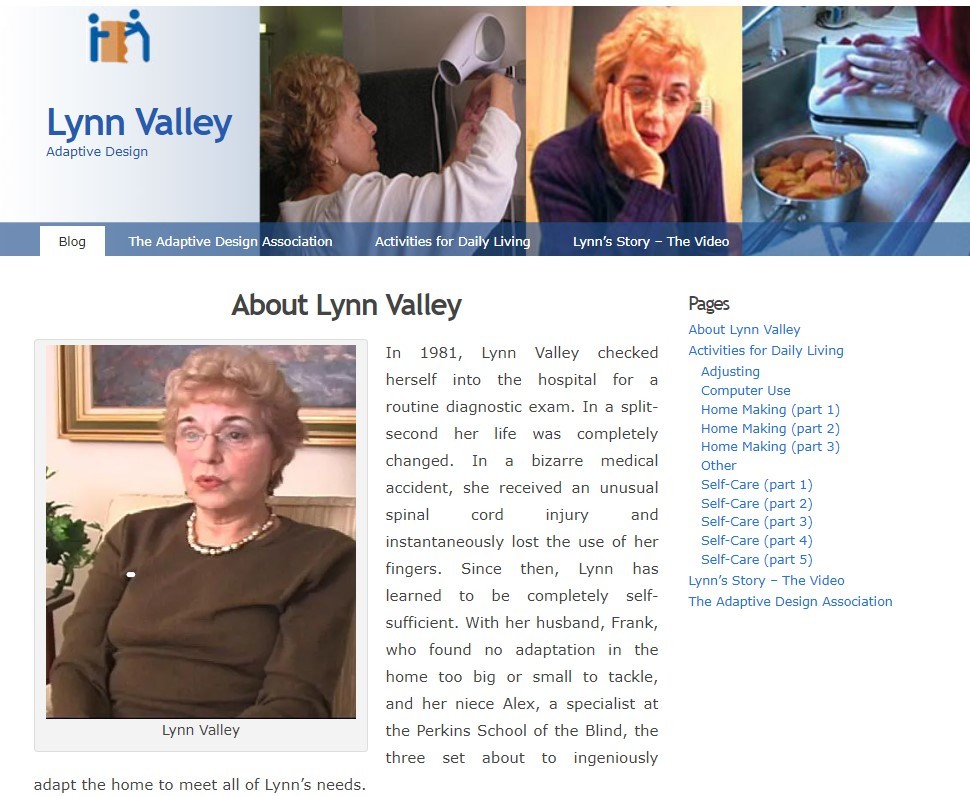
Even though I just had to watch three videos from Lynn Valley's website, I found myself irresistibly drawn into a captivating world of adaptability and perseverance. Lynn Valley's story is not just a narrative of overcoming challenges but an embodiment of ingenuity and the spirit of resilience. I ended up watching not just three, but all the videos in the home-making, computer use, and self-care sections, finding inspiration in each one.
Lynn's philosophy, which can be summarized as "Do what you can do," resonated deeply with me. It's a testament to her indomitable spirit that even when faced with significant physical challenges, she finds ways to reclaim her autonomy and live life on her terms. This approach reminded me of the Indian concept "jugaad," a kind of innovative fix or an unconventional solution born out of resourcefulness.
The videos showcased how seemingly simple adaptations can lead to profound changes in one's ability to perform daily tasks. The tools Lynn uses to interact with her computer, including the adapted sticks with straps reminiscent of the stylus we saw in class to use the keyboard and control the rollable cursor, demonstrate how modifications to everyday tools can make them accessible and usable for everyone. However, it wasn't just the innovation of these tools that caught my attention but the thoughtful details that went into them. For instance, the straps attached to her adaptive tools allow Lynn to utilize the unique position of her thumb, emphasizing the importance of personalized designs in assistive technologies.
One of the memorable moments was watching Lynn open a letter. The dichotomy between functionality and safety was striking. The more effective tool looked potentially dangerous, especially when she attempted to cover it, while the safer tool felt quite ineffective. This raises pertinent questions about ensuring safety in adaptive designs without compromising on their utility.
Finally, perhaps one of the most striking adaptations was the simple yet effective use of a tennis ball to grip a toothbrush. I feel out of all the adaptations that I saw through the video series, this was one that I could have never come up with.
Lynn Valley's videos are more than just demonstrations of adaptive techniques; they're a celebration of human spirit, determination, and the limitless potential of adaptive design. The narrative and teachings within Lynn Valley’s videos serve as the foundational philosophy behind the Adaptive Design Association.
Even though I just had to watch three videos from Lynn Valley's website, I found myself irresistibly drawn into a captivating world of adaptability and perseverance. Lynn Valley's story is not just a narrative of overcoming challenges but an embodiment of ingenuity and the spirit of resilience. I ended up watching not just three, but all the videos in the home-making, computer use, and self-care sections, finding inspiration in each one.
Lynn's philosophy, which can be summarized as "Do what you can do," resonated deeply with me. It's a testament to her indomitable spirit that even when faced with significant physical challenges, she finds ways to reclaim her autonomy and live life on her terms. This approach reminded me of the Indian concept "jugaad," a kind of innovative fix or an unconventional solution born out of resourcefulness.
The videos showcased how seemingly simple adaptations can lead to profound changes in one's ability to perform daily tasks. The tools Lynn uses to interact with her computer, including the adapted sticks with straps reminiscent of the stylus we saw in class to use the keyboard and control the rollable cursor, demonstrate how modifications to everyday tools can make them accessible and usable for everyone. However, it wasn't just the innovation of these tools that caught my attention but the thoughtful details that went into them. For instance, the straps attached to her adaptive tools allow Lynn to utilize the unique position of her thumb, emphasizing the importance of personalized designs in assistive technologies.
One of the memorable moments was watching Lynn open a letter. The dichotomy between functionality and safety was striking. The more effective tool looked potentially dangerous, especially when she attempted to cover it, while the safer tool felt quite ineffective. This raises pertinent questions about ensuring safety in adaptive designs without compromising on their utility.
Finally, perhaps one of the most striking adaptations was the simple yet effective use of a tennis ball to grip a toothbrush. I feel out of all the adaptations that I saw through the video series, this was one that I could have never come up with.
Lynn Valley's videos are more than just demonstrations of adaptive techniques; they're a celebration of human spirit, determination, and the limitless potential of adaptive design. The narrative and teachings within Lynn Valley’s videos serve as the foundational philosophy behind the Adaptive Design Association.
Even though I just had to watch three videos from Lynn Valley's website, I found myself irresistibly drawn into a captivating world of adaptability and perseverance. Lynn Valley's story is not just a narrative of overcoming challenges but an embodiment of ingenuity and the spirit of resilience. I ended up watching not just three, but all the videos in the home-making, computer use, and self-care sections, finding inspiration in each one.
Lynn's philosophy, which can be summarized as "Do what you can do," resonated deeply with me. It's a testament to her indomitable spirit that even when faced with significant physical challenges, she finds ways to reclaim her autonomy and live life on her terms. This approach reminded me of the Indian concept "jugaad," a kind of innovative fix or an unconventional solution born out of resourcefulness.
The videos showcased how seemingly simple adaptations can lead to profound changes in one's ability to perform daily tasks. The tools Lynn uses to interact with her computer, including the adapted sticks with straps reminiscent of the stylus we saw in class to use the keyboard and control the rollable cursor, demonstrate how modifications to everyday tools can make them accessible and usable for everyone. However, it wasn't just the innovation of these tools that caught my attention but the thoughtful details that went into them. For instance, the straps attached to her adaptive tools allow Lynn to utilize the unique position of her thumb, emphasizing the importance of personalized designs in assistive technologies.
One of the memorable moments was watching Lynn open a letter. The dichotomy between functionality and safety was striking. The more effective tool looked potentially dangerous, especially when she attempted to cover it, while the safer tool felt quite ineffective. This raises pertinent questions about ensuring safety in adaptive designs without compromising on their utility.
Finally, perhaps one of the most striking adaptations was the simple yet effective use of a tennis ball to grip a toothbrush. I feel out of all the adaptations that I saw through the video series, this was one that I could have never come up with.
Lynn Valley's videos are more than just demonstrations of adaptive techniques; they're a celebration of human spirit, determination, and the limitless potential of adaptive design. The narrative and teachings within Lynn Valley’s videos serve as the foundational philosophy behind the Adaptive Design Association.