Assistive Technology For Everyone
Assistive Technology For Everyone
Assistive Technology For Everyone
Designers ought to shift from an 'us vs. them' mindset to one that embraces all abilities, framing design challenges not as catering to 'them,' the disabled, but as problem-solving for 'us,' a diverse and inclusive human collective
Designers ought to shift from an 'us vs. them' mindset to one that embraces all abilities, framing design challenges not as catering to 'them,' the disabled, but as problem-solving for 'us,' a diverse and inclusive human collective
Designers ought to shift from an 'us vs. them' mindset to one that embraces all abilities, framing design challenges not as catering to 'them,' the disabled, but as problem-solving for 'us,' a diverse and inclusive human collective
The article on WIRED by Sana Hendren genuinely struck a chord with me because it shattered some preconceived notions about assistive technology. It made me rethink the labels of 'normal' and 'disabled,' challenging my previous understanding that design should cater to the 'average' user. By framing all technology as "assistive," it makes us think about the limitations of designing for 'us' versus 'them,' an arbitrary distinction that has led to many missed opportunities for universal design. The example of the Eames' splint, initially intended for a specific medical use but with broader applications, stood out as a clear indicator that the line between specialized and general design is blurrier than we might think.
The various case studies were particularly enlightening, each showcasing how ingenious design can not only empower those with specific needs but also lead to innovations that benefit us all. For instance, the tongue-controlled wheelchair navigation system from Georgia Tech researchers has potential applications far beyond mobility for quadriplegic individuals, like hands-free gaming or computer operation. Similarly, the Victoria & Albert museum's 'Hearwear' exhibit gives a makeover to hearing aids, transforming them from medical necessities into fashion accessories without compromising their primary function. These examples prove that design innovation often happens at the intersections of diverse human needs.
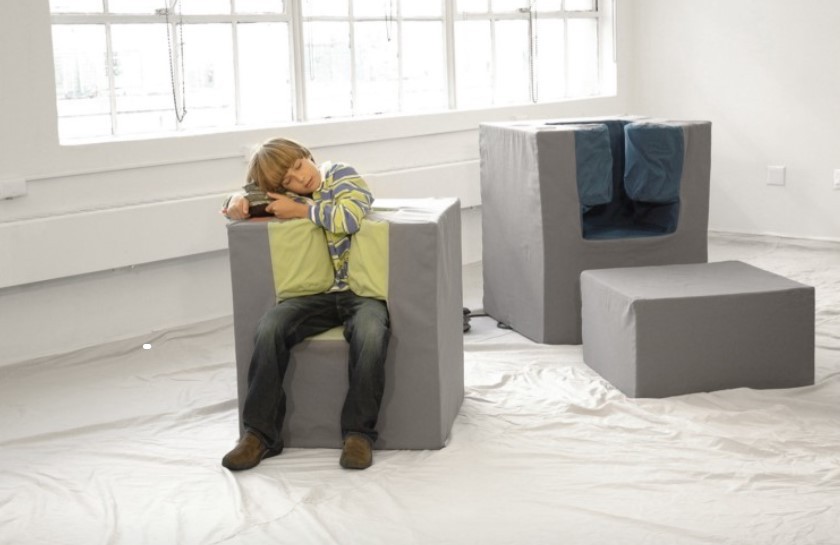
I was also intrigued by the notion that objects could have multiple stories and uses that extend beyond their primary functions. For example, the 'hugging machine' inspired by Temple Grandin. The chair provides therapeutic deep pressure and also enters the realm of poetic and affective experience. It's a compelling argument for why design should be more responsive and flexible, capable of adapting to a person's changing needs and conditions. This article is a call to action for designers and policymakers to adopt a more inclusive, human-centric approach that sees the beauty in our collective diversity and uses it as a springboard for innovation.
The article on WIRED by Sana Hendren genuinely struck a chord with me because it shattered some preconceived notions about assistive technology. It made me rethink the labels of 'normal' and 'disabled,' challenging my previous understanding that design should cater to the 'average' user. By framing all technology as "assistive," it makes us think about the limitations of designing for 'us' versus 'them,' an arbitrary distinction that has led to many missed opportunities for universal design. The example of the Eames' splint, initially intended for a specific medical use but with broader applications, stood out as a clear indicator that the line between specialized and general design is blurrier than we might think.
The various case studies were particularly enlightening, each showcasing how ingenious design can not only empower those with specific needs but also lead to innovations that benefit us all. For instance, the tongue-controlled wheelchair navigation system from Georgia Tech researchers has potential applications far beyond mobility for quadriplegic individuals, like hands-free gaming or computer operation. Similarly, the Victoria & Albert museum's 'Hearwear' exhibit gives a makeover to hearing aids, transforming them from medical necessities into fashion accessories without compromising their primary function. These examples prove that design innovation often happens at the intersections of diverse human needs.
I was also intrigued by the notion that objects could have multiple stories and uses that extend beyond their primary functions. For example, the 'hugging machine' inspired by Temple Grandin. The chair provides therapeutic deep pressure and also enters the realm of poetic and affective experience. It's a compelling argument for why design should be more responsive and flexible, capable of adapting to a person's changing needs and conditions. This article is a call to action for designers and policymakers to adopt a more inclusive, human-centric approach that sees the beauty in our collective diversity and uses it as a springboard for innovation.
The article on WIRED by Sana Hendren genuinely struck a chord with me because it shattered some preconceived notions about assistive technology. It made me rethink the labels of 'normal' and 'disabled,' challenging my previous understanding that design should cater to the 'average' user. By framing all technology as "assistive," it makes us think about the limitations of designing for 'us' versus 'them,' an arbitrary distinction that has led to many missed opportunities for universal design. The example of the Eames' splint, initially intended for a specific medical use but with broader applications, stood out as a clear indicator that the line between specialized and general design is blurrier than we might think.
The various case studies were particularly enlightening, each showcasing how ingenious design can not only empower those with specific needs but also lead to innovations that benefit us all. For instance, the tongue-controlled wheelchair navigation system from Georgia Tech researchers has potential applications far beyond mobility for quadriplegic individuals, like hands-free gaming or computer operation. Similarly, the Victoria & Albert museum's 'Hearwear' exhibit gives a makeover to hearing aids, transforming them from medical necessities into fashion accessories without compromising their primary function. These examples prove that design innovation often happens at the intersections of diverse human needs.
I was also intrigued by the notion that objects could have multiple stories and uses that extend beyond their primary functions. For example, the 'hugging machine' inspired by Temple Grandin. The chair provides therapeutic deep pressure and also enters the realm of poetic and affective experience. It's a compelling argument for why design should be more responsive and flexible, capable of adapting to a person's changing needs and conditions. This article is a call to action for designers and policymakers to adopt a more inclusive, human-centric approach that sees the beauty in our collective diversity and uses it as a springboard for innovation.