Adapting a Stackable Toy - Project Progress #1
Adapting a Stackable Toy - Project Progress #1
Adapting a Stackable Toy - Project Progress #1
Here's a glimpse into our team's progress: We started with brainstorming sessions, moved on to crafting a solid proposal, and have now dived into rapid prototyping
Here's a glimpse into our team's progress: We started with brainstorming sessions, moved on to crafting a solid proposal, and have now dived into rapid prototyping
Here's a glimpse into our team's progress: We started with brainstorming sessions, moved on to crafting a solid proposal, and have now dived into rapid prototyping
Team
Ruhsona, Jaden, Swostik
Introduction:
The objective of our project is to adapt a stackable toy to cater to children with weakened muscular strength, limited grip strength, and compromised fine motor movement. Such issues could arise due to various reasons, including muscular dystrophies, congenital deformities, neuropathic conditions, or injuries.
Inspiration:
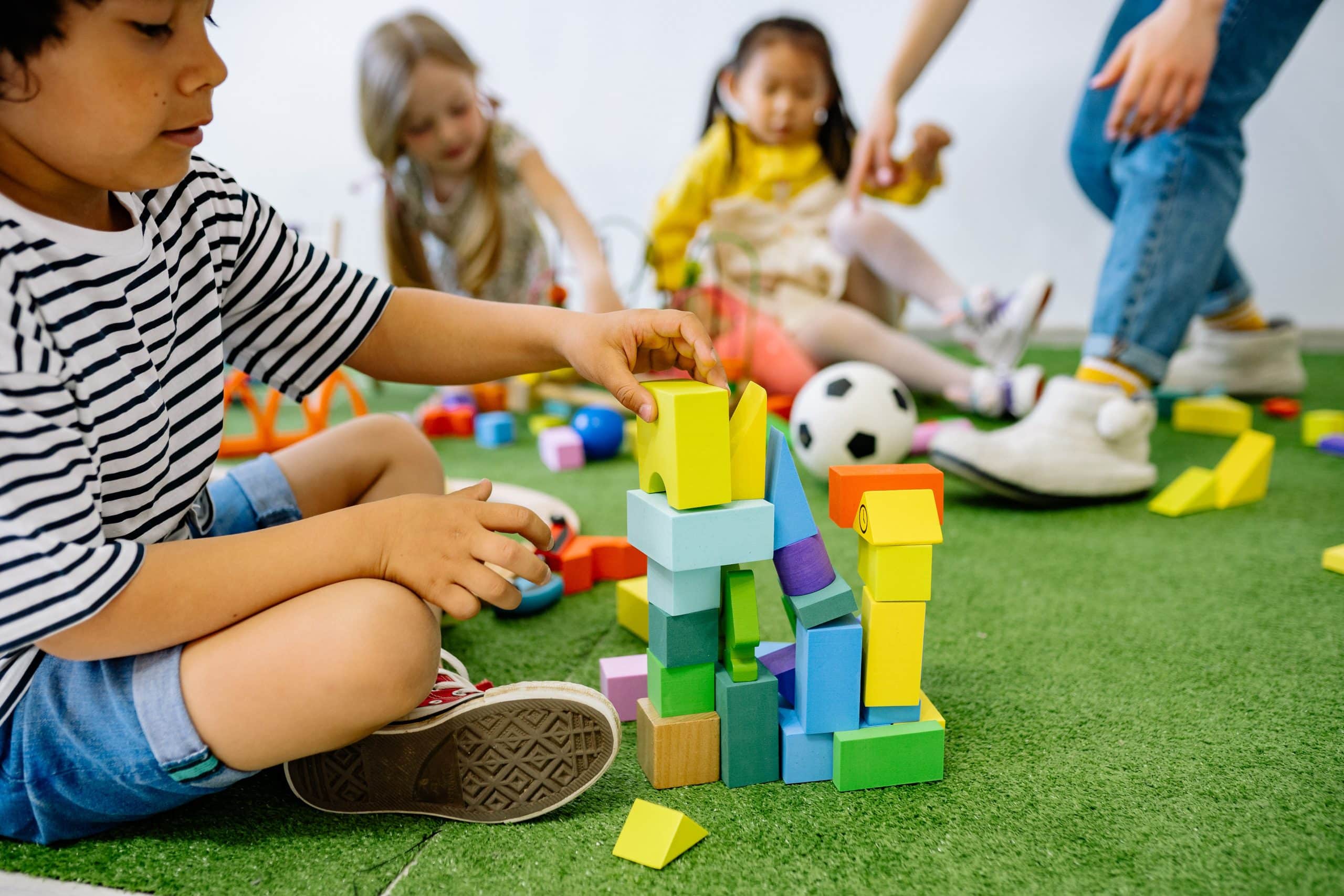
Our primary inspiration was a video of a child with muscular issues attempting to play with an adapted version of the toy, which utilized velcro straps. Although the adaptation facilitated some interaction, there were evident struggles that prompted us to innovate and further the design to enhance accessibility and enjoyment.
Brainstorming Process:
Embracing a structured approach, we deployed several brainstorming techniques:
SCAMPER helped us evaluate the toy's existing features and pinpoint areas of improvement.
The Inclusive Persona method allowed us to empathize with the user and design from their perspective.
The Evaluation spider acted as a metric to score our ideas.
Lastly, a comprehensive Mindmap was developed that integrated affordances, signifiers, persona networks, and more, laying out the pathway to the blueprint of our adaptation.
Preliminary Ideas:
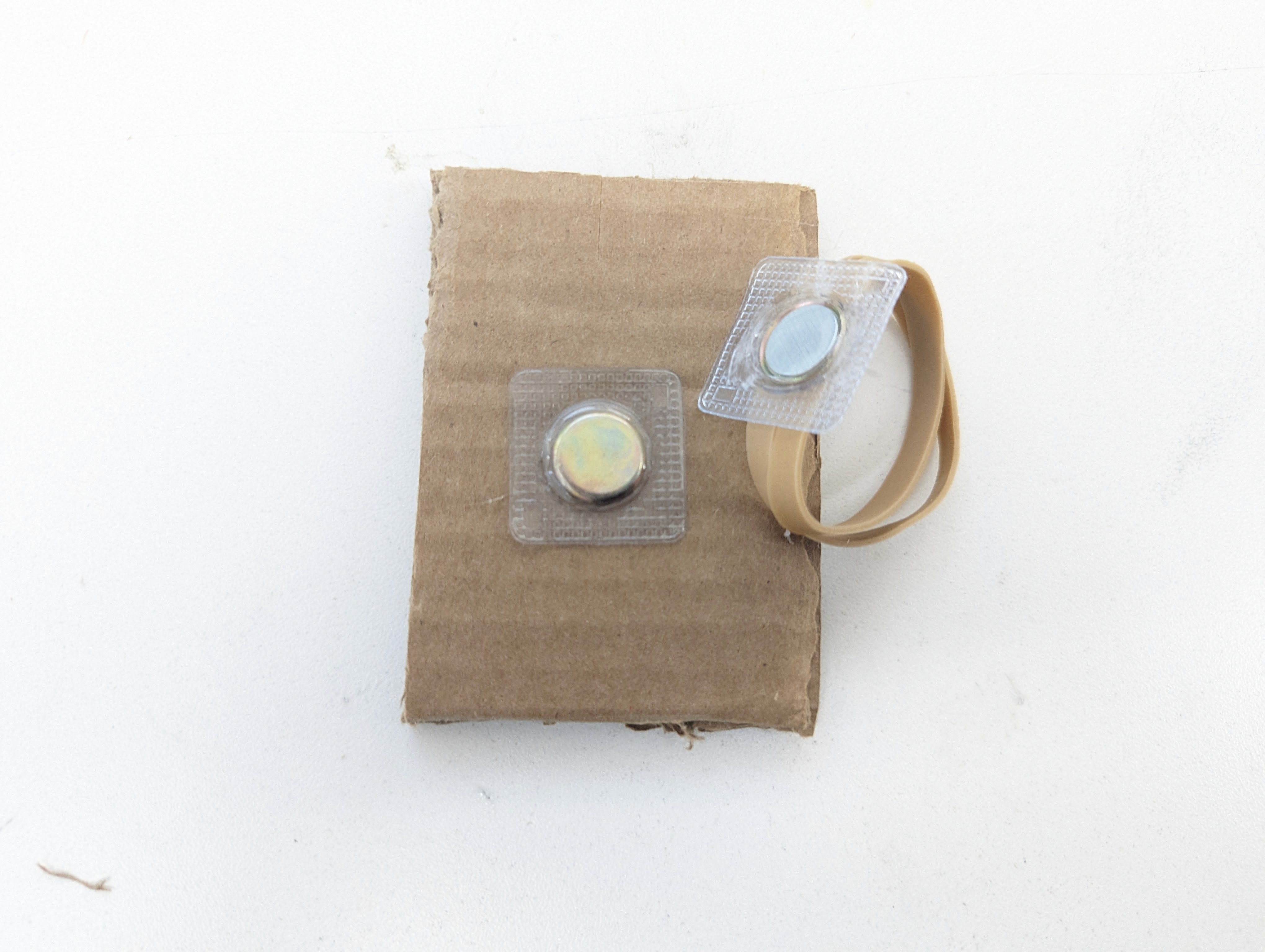
Magnets Over Velcro: Switching to small magnets from Velcro helps children engage with the toy without exerting excessive physical effort, a limitation observed with the velcro adaptation. With velcro, kids needed to apply considerable strength to detach the components - an action counterintuitive to the toy's very purpose of assisting them. Magnets, on the other hand, offer seamless attachment and detachment. Moreover, when stacking, the magnetic pull ensures the components align and snap into place, minimizing chances of frustration or misalignment.
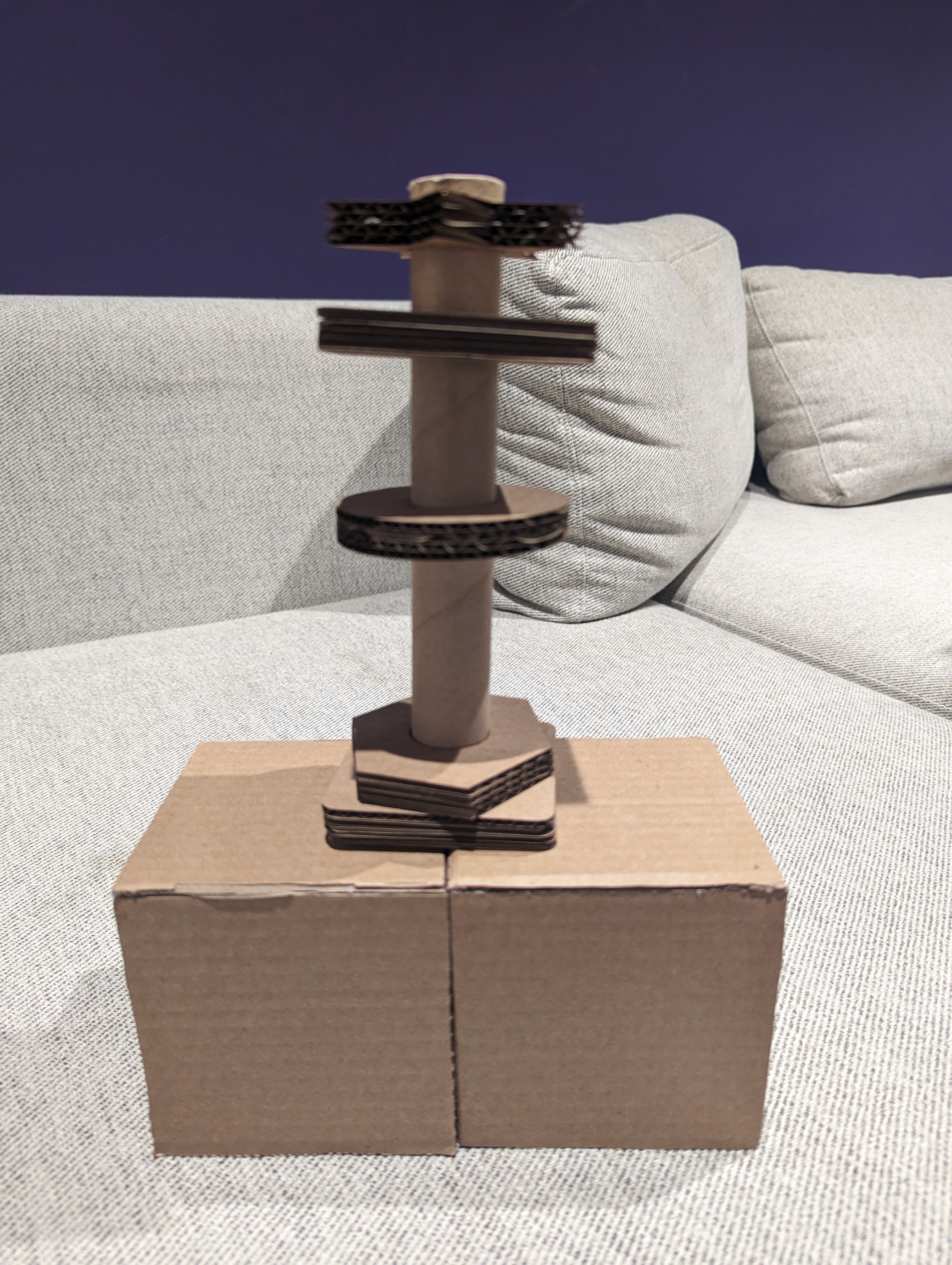
Shape Differentiation: Drawing inspiration from this toy, we aim to innovate the design of our adaptation by introducing smaller, uniquely identifiable shapes instead of the traditional large, color-coded rings. These unique shapes, such as triangles, squares, or pentagons, offer two-fold benefits. First, they provide a more ergonomic grasp, considering their compact size and distinct edges. This design caters especially to those with limited grip strength. Second, by diversifying shapes, the toy becomes inclusive to children with color vision deficiencies. Instead of relying on color distinctions, they can now engage with the toy through shape differentiation, broadening the toy's appeal and usability.
Levels of Difficulty & Feedback:
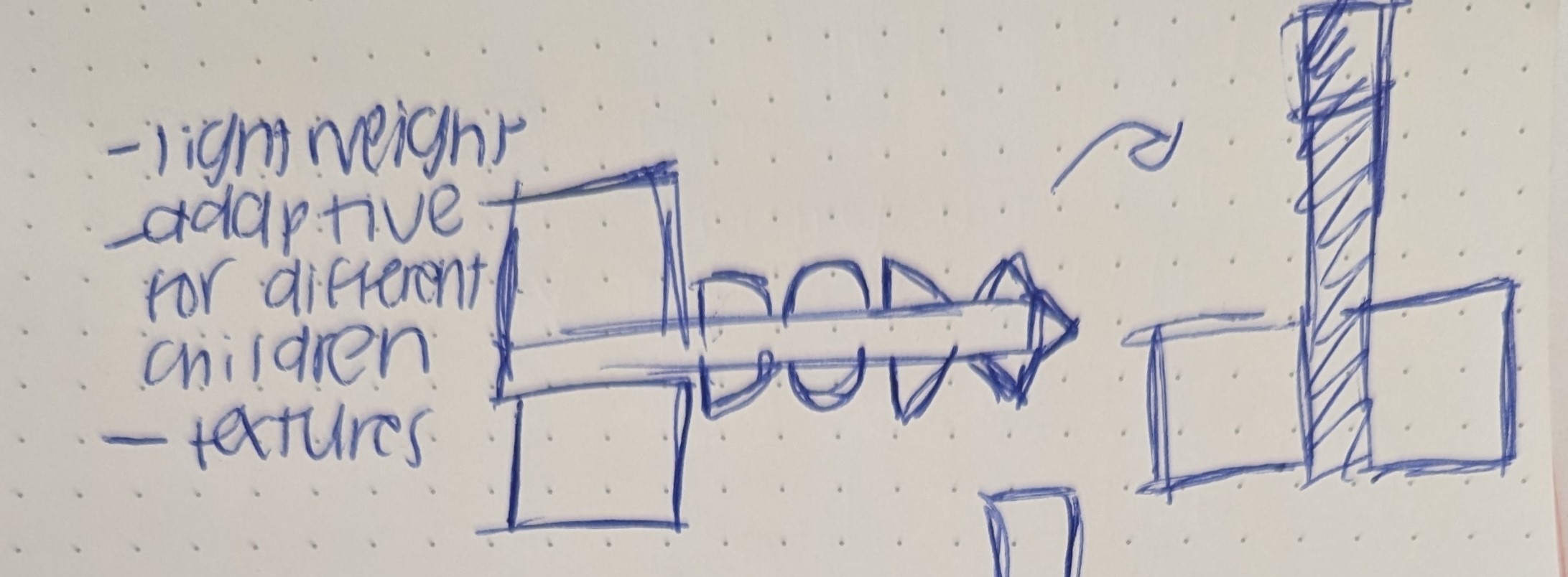
Level 1: Laying the toy horizontally transforms the play method. In this orientation, children can focus primarily on hand-eye coordination without the added complexity of vertical stacking. It provides a gentler introduction to the toy and builds foundational skills.
Level 2: Here, we reintroduce the traditional vertical stacking method. Children can now apply the skills honed in Level 1 in a more challenging setting, pushing their coordination and strength skills a notch higher.
Level 3: This level offers an advanced challenge. Pattern-matching tasks children with recreating specific shape sequences, enhancing their cognitive abilities and memory recall. It offers a rewarding experience for those seeking a more intricate interaction with the toy and also helps to evaluate progress.
Optional Feature: As an enhancement, we are considering the incorporation of textures on the stackable shapes. The main goal of this feature is to provide a better grip, especially for children who might struggle with holding smoother objects. This can be particularly beneficial for those with limited muscular strength or fine motor skills, enabling them to grasp and maneuver the shapes with greater ease and confidence.
Rapid Prototyping:
With our ideas crystallized, we initiated the prototyping phase. Harnessing cardboard as our primary material, we employed laser-cutting for precision and hot gluing for assembly. This rudimentary prototype acts as a tangible representation of our ideas, laying the foundation for future refinements.
___
We look forward to iterating our design based on feedback and eventually crafting a toy that is both accessible and delightful.
Team
Ruhsona, Jaden, Swostik
Introduction:
The objective of our project is to adapt a stackable toy to cater to children with weakened muscular strength, limited grip strength, and compromised fine motor movement. Such issues could arise due to various reasons, including muscular dystrophies, congenital deformities, neuropathic conditions, or injuries.
Inspiration:
Our primary inspiration was a video of a child with muscular issues attempting to play with an adapted version of the toy, which utilized velcro straps. Although the adaptation facilitated some interaction, there were evident struggles that prompted us to innovate and further the design to enhance accessibility and enjoyment.
Brainstorming Process:
Embracing a structured approach, we deployed several brainstorming techniques:
SCAMPER helped us evaluate the toy's existing features and pinpoint areas of improvement.
The Inclusive Persona method allowed us to empathize with the user and design from their perspective.
The Evaluation spider acted as a metric to score our ideas.
Lastly, a comprehensive Mindmap was developed that integrated affordances, signifiers, persona networks, and more, laying out the pathway to the blueprint of our adaptation.
Preliminary Ideas:
Magnets Over Velcro: Switching to small magnets from Velcro helps children engage with the toy without exerting excessive physical effort, a limitation observed with the velcro adaptation. With velcro, kids needed to apply considerable strength to detach the components - an action counterintuitive to the toy's very purpose of assisting them. Magnets, on the other hand, offer seamless attachment and detachment. Moreover, when stacking, the magnetic pull ensures the components align and snap into place, minimizing chances of frustration or misalignment.
Shape Differentiation: Drawing inspiration from this toy, we aim to innovate the design of our adaptation by introducing smaller, uniquely identifiable shapes instead of the traditional large, color-coded rings. These unique shapes, such as triangles, squares, or pentagons, offer two-fold benefits. First, they provide a more ergonomic grasp, considering their compact size and distinct edges. This design caters especially to those with limited grip strength. Second, by diversifying shapes, the toy becomes inclusive to children with color vision deficiencies. Instead of relying on color distinctions, they can now engage with the toy through shape differentiation, broadening the toy's appeal and usability.
Levels of Difficulty & Feedback:
Level 1: Laying the toy horizontally transforms the play method. In this orientation, children can focus primarily on hand-eye coordination without the added complexity of vertical stacking. It provides a gentler introduction to the toy and builds foundational skills.
Level 2: Here, we reintroduce the traditional vertical stacking method. Children can now apply the skills honed in Level 1 in a more challenging setting, pushing their coordination and strength skills a notch higher.
Level 3: This level offers an advanced challenge. Pattern-matching tasks children with recreating specific shape sequences, enhancing their cognitive abilities and memory recall. It offers a rewarding experience for those seeking a more intricate interaction with the toy and also helps to evaluate progress.
Optional Feature: As an enhancement, we are considering the incorporation of textures on the stackable shapes. The main goal of this feature is to provide a better grip, especially for children who might struggle with holding smoother objects. This can be particularly beneficial for those with limited muscular strength or fine motor skills, enabling them to grasp and maneuver the shapes with greater ease and confidence.
Rapid Prototyping:
With our ideas crystallized, we initiated the prototyping phase. Harnessing cardboard as our primary material, we employed laser-cutting for precision and hot gluing for assembly. This rudimentary prototype acts as a tangible representation of our ideas, laying the foundation for future refinements.
___
We look forward to iterating our design based on feedback and eventually crafting a toy that is both accessible and delightful.
Team
Ruhsona, Jaden, Swostik
Introduction:
The objective of our project is to adapt a stackable toy to cater to children with weakened muscular strength, limited grip strength, and compromised fine motor movement. Such issues could arise due to various reasons, including muscular dystrophies, congenital deformities, neuropathic conditions, or injuries.
Inspiration:
Our primary inspiration was a video of a child with muscular issues attempting to play with an adapted version of the toy, which utilized velcro straps. Although the adaptation facilitated some interaction, there were evident struggles that prompted us to innovate and further the design to enhance accessibility and enjoyment.
Brainstorming Process:
Embracing a structured approach, we deployed several brainstorming techniques:
SCAMPER helped us evaluate the toy's existing features and pinpoint areas of improvement.
The Inclusive Persona method allowed us to empathize with the user and design from their perspective.
The Evaluation spider acted as a metric to score our ideas.
Lastly, a comprehensive Mindmap was developed that integrated affordances, signifiers, persona networks, and more, laying out the pathway to the blueprint of our adaptation.
Preliminary Ideas:
Magnets Over Velcro: Switching to small magnets from Velcro helps children engage with the toy without exerting excessive physical effort, a limitation observed with the velcro adaptation. With velcro, kids needed to apply considerable strength to detach the components - an action counterintuitive to the toy's very purpose of assisting them. Magnets, on the other hand, offer seamless attachment and detachment. Moreover, when stacking, the magnetic pull ensures the components align and snap into place, minimizing chances of frustration or misalignment.
Shape Differentiation: Drawing inspiration from this toy, we aim to innovate the design of our adaptation by introducing smaller, uniquely identifiable shapes instead of the traditional large, color-coded rings. These unique shapes, such as triangles, squares, or pentagons, offer two-fold benefits. First, they provide a more ergonomic grasp, considering their compact size and distinct edges. This design caters especially to those with limited grip strength. Second, by diversifying shapes, the toy becomes inclusive to children with color vision deficiencies. Instead of relying on color distinctions, they can now engage with the toy through shape differentiation, broadening the toy's appeal and usability.
Levels of Difficulty & Feedback:
Level 1: Laying the toy horizontally transforms the play method. In this orientation, children can focus primarily on hand-eye coordination without the added complexity of vertical stacking. It provides a gentler introduction to the toy and builds foundational skills.
Level 2: Here, we reintroduce the traditional vertical stacking method. Children can now apply the skills honed in Level 1 in a more challenging setting, pushing their coordination and strength skills a notch higher.
Level 3: This level offers an advanced challenge. Pattern-matching tasks children with recreating specific shape sequences, enhancing their cognitive abilities and memory recall. It offers a rewarding experience for those seeking a more intricate interaction with the toy and also helps to evaluate progress.
Optional Feature: As an enhancement, we are considering the incorporation of textures on the stackable shapes. The main goal of this feature is to provide a better grip, especially for children who might struggle with holding smoother objects. This can be particularly beneficial for those with limited muscular strength or fine motor skills, enabling them to grasp and maneuver the shapes with greater ease and confidence.
Rapid Prototyping:
With our ideas crystallized, we initiated the prototyping phase. Harnessing cardboard as our primary material, we employed laser-cutting for precision and hot gluing for assembly. This rudimentary prototype acts as a tangible representation of our ideas, laying the foundation for future refinements.
___
We look forward to iterating our design based on feedback and eventually crafting a toy that is both accessible and delightful.