A Firsthand Insight into New York's Transit Hurdles
A Firsthand Insight into New York's Transit Hurdles
A Firsthand Insight into New York's Transit Hurdles
An account of the challenges wheelchair users face in New York's less-than-accessible transit system.
An account of the challenges wheelchair users face in New York's less-than-accessible transit system.
An account of the challenges wheelchair users face in New York's less-than-accessible transit system.
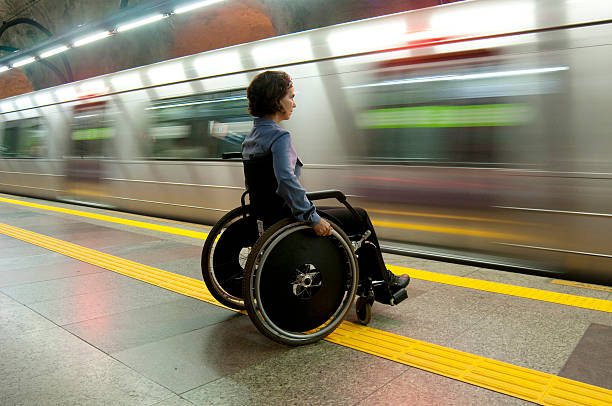
In the piece "The Frustrations of Navigating New York's Inaccessible Subway System," Sasha Blair-Goldensohn, a distinguished software engineer at Google and a passionate advocate for disability rights, articulates a deeply personal narrative detailing the hindrances confronted by those with disabilities amidst the vibrant, yet challenging, landscape of New York City. Sasha's narrative serves as a profound testament to the pressing need for holistic accessibility in metropolitan infrastructure.
The onset of Sasha's odyssey was marked by a devastating accident resulting in spinal cord injuries, compelling him to rely on a wheelchair for mobility. Although his recovery journey was aided by the dedication of healthcare professionals and the unwavering support of his family, he soon unearthed that the challenges ahead weren't solely tethered to his physical state but were intricately interwoven into the very fabric of the city’s infrastructure. Sasha brings to the fore the glaring inadequacies of New York’s subway system from an accessibility perspective. Astonishingly, a mere 92 of the 425 stations cater to wheelchair users. This discrepancy, further aggravated by recurrent elevator malfunctions, misleading information, and the absence of viable alternative pathways, paints a grim picture for those reliant on wheelchairs. Instances like Sasha’s own ordeal, where a malfunctioning elevator left him marooned on a platform, emphasize the dire need for rectification.
Drawing a parallel between New York's subway system and Boston's — which proudly flaunts over 90% wheelchair-friendly infrastructure — Sasha accentuates the scope for enhancement. Boston's commendable transition was catalyzed by a decisive legal intervention, an enlightening testament to the transformative potential of advocacy underpinned by legal recourse.
A salient argument posited by Sasha is the debunking of the misperception that accessibility enhancements for one demographic invariably compromises the experience for another. To buttress his stance, he references the "Curb-Cut Effect." This concept elucidates that infrastructural modifications, initially envisioned for the disabled, invariably have widespread benefits, aiding diverse groups like parents with strollers or tourists lugging suitcases. Such insights beckon a more encompassing approach to urban development and enhancements in accessibility.
Sasha's exposition is a clarion call urging New York’s transit overseers and decision-makers to undertake tangible reforms. While sporadic acts of goodwill undoubtedly warm the heart, they cannot masquerade as a replacement for a seamlessly accessible transit system. Sasha invokes the monumental Americans with Disabilities Act of 1990, emphasizing its ethos of inclusivity, and beseeches transit officials to embrace the aspirations of accessibility proponents.
To encapsulate, through the lens of Sasha Blair-Goldensohn, we gain invaluable insights into the daunting obstacles wheelchair users grapple with daily in the hustle and bustle of New York City. His compelling narrative accentuates the imperativeness of embedding accessibility into urban planning, fostering an environment where every individual, regardless of their physical capabilities, can navigate with dignity and autonomy.
In the piece "The Frustrations of Navigating New York's Inaccessible Subway System," Sasha Blair-Goldensohn, a distinguished software engineer at Google and a passionate advocate for disability rights, articulates a deeply personal narrative detailing the hindrances confronted by those with disabilities amidst the vibrant, yet challenging, landscape of New York City. Sasha's narrative serves as a profound testament to the pressing need for holistic accessibility in metropolitan infrastructure.
The onset of Sasha's odyssey was marked by a devastating accident resulting in spinal cord injuries, compelling him to rely on a wheelchair for mobility. Although his recovery journey was aided by the dedication of healthcare professionals and the unwavering support of his family, he soon unearthed that the challenges ahead weren't solely tethered to his physical state but were intricately interwoven into the very fabric of the city’s infrastructure. Sasha brings to the fore the glaring inadequacies of New York’s subway system from an accessibility perspective. Astonishingly, a mere 92 of the 425 stations cater to wheelchair users. This discrepancy, further aggravated by recurrent elevator malfunctions, misleading information, and the absence of viable alternative pathways, paints a grim picture for those reliant on wheelchairs. Instances like Sasha’s own ordeal, where a malfunctioning elevator left him marooned on a platform, emphasize the dire need for rectification.
Drawing a parallel between New York's subway system and Boston's — which proudly flaunts over 90% wheelchair-friendly infrastructure — Sasha accentuates the scope for enhancement. Boston's commendable transition was catalyzed by a decisive legal intervention, an enlightening testament to the transformative potential of advocacy underpinned by legal recourse.
A salient argument posited by Sasha is the debunking of the misperception that accessibility enhancements for one demographic invariably compromises the experience for another. To buttress his stance, he references the "Curb-Cut Effect." This concept elucidates that infrastructural modifications, initially envisioned for the disabled, invariably have widespread benefits, aiding diverse groups like parents with strollers or tourists lugging suitcases. Such insights beckon a more encompassing approach to urban development and enhancements in accessibility.
Sasha's exposition is a clarion call urging New York’s transit overseers and decision-makers to undertake tangible reforms. While sporadic acts of goodwill undoubtedly warm the heart, they cannot masquerade as a replacement for a seamlessly accessible transit system. Sasha invokes the monumental Americans with Disabilities Act of 1990, emphasizing its ethos of inclusivity, and beseeches transit officials to embrace the aspirations of accessibility proponents.
To encapsulate, through the lens of Sasha Blair-Goldensohn, we gain invaluable insights into the daunting obstacles wheelchair users grapple with daily in the hustle and bustle of New York City. His compelling narrative accentuates the imperativeness of embedding accessibility into urban planning, fostering an environment where every individual, regardless of their physical capabilities, can navigate with dignity and autonomy.
In the piece "The Frustrations of Navigating New York's Inaccessible Subway System," Sasha Blair-Goldensohn, a distinguished software engineer at Google and a passionate advocate for disability rights, articulates a deeply personal narrative detailing the hindrances confronted by those with disabilities amidst the vibrant, yet challenging, landscape of New York City. Sasha's narrative serves as a profound testament to the pressing need for holistic accessibility in metropolitan infrastructure.
The onset of Sasha's odyssey was marked by a devastating accident resulting in spinal cord injuries, compelling him to rely on a wheelchair for mobility. Although his recovery journey was aided by the dedication of healthcare professionals and the unwavering support of his family, he soon unearthed that the challenges ahead weren't solely tethered to his physical state but were intricately interwoven into the very fabric of the city’s infrastructure. Sasha brings to the fore the glaring inadequacies of New York’s subway system from an accessibility perspective. Astonishingly, a mere 92 of the 425 stations cater to wheelchair users. This discrepancy, further aggravated by recurrent elevator malfunctions, misleading information, and the absence of viable alternative pathways, paints a grim picture for those reliant on wheelchairs. Instances like Sasha’s own ordeal, where a malfunctioning elevator left him marooned on a platform, emphasize the dire need for rectification.
Drawing a parallel between New York's subway system and Boston's — which proudly flaunts over 90% wheelchair-friendly infrastructure — Sasha accentuates the scope for enhancement. Boston's commendable transition was catalyzed by a decisive legal intervention, an enlightening testament to the transformative potential of advocacy underpinned by legal recourse.
A salient argument posited by Sasha is the debunking of the misperception that accessibility enhancements for one demographic invariably compromises the experience for another. To buttress his stance, he references the "Curb-Cut Effect." This concept elucidates that infrastructural modifications, initially envisioned for the disabled, invariably have widespread benefits, aiding diverse groups like parents with strollers or tourists lugging suitcases. Such insights beckon a more encompassing approach to urban development and enhancements in accessibility.
Sasha's exposition is a clarion call urging New York’s transit overseers and decision-makers to undertake tangible reforms. While sporadic acts of goodwill undoubtedly warm the heart, they cannot masquerade as a replacement for a seamlessly accessible transit system. Sasha invokes the monumental Americans with Disabilities Act of 1990, emphasizing its ethos of inclusivity, and beseeches transit officials to embrace the aspirations of accessibility proponents.
To encapsulate, through the lens of Sasha Blair-Goldensohn, we gain invaluable insights into the daunting obstacles wheelchair users grapple with daily in the hustle and bustle of New York City. His compelling narrative accentuates the imperativeness of embedding accessibility into urban planning, fostering an environment where every individual, regardless of their physical capabilities, can navigate with dignity and autonomy.